Evaluating Metro City: A Practical Guide to Minimalist Typography for Modern Design
In the landscape of contemporary graphic design, the choice of typography often dictates the tone, readability, and overall effectiveness of a visual communication piece. Among the myriad of typefaces available to designers, Metro City has emerged as a compelling option for those seeking a balance between structural rigor and aesthetic simplicity. This font is not merely a decorative element; it serves as a foundational tool for creating clean, authoritative, and highly legible designs across various mediums.
For professionals aged 20 to 50 who are constantly evaluating tools to enhance their workflow, understanding the specific characteristics and applications of Metro City is essential. Whether you are designing apparel, crafting editorial layouts, or developing brand identities, knowing when to deploy this typeface—and when to look elsewhere—can significantly impact the success of your project. This article provides a detailed evaluation of Metro City, exploring its distinct features, practical use cases, and how it compares to broader typographic approaches in the industry.
Understanding the Core Identity of Metro City
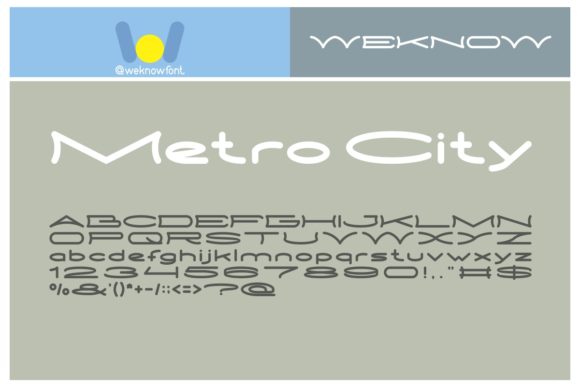
Metro City is fundamentally defined by its minimalistic approach. It belongs to the category of display fonts, which are designed to be read at larger sizes rather than in long paragraphs of body text. The distinguishing feature of Metro City lies in its geometric precision and lack of unnecessary ornamentation. Unlike serif fonts that rely on small projecting features at the ends of strokes, or script fonts that mimic handwriting, Metro City presents a stark, modern appearance.
The font’s structure is built on clean lines and uniform stroke weights, giving it a sense of stability and order. This makes it particularly effective in contexts where clarity is paramount. The name itself suggests an urban influence, evoking the structured grid systems found in city planning and modern architecture. For designers, this translates to a typeface that feels both contemporary and timeless, capable of anchoring a design without overwhelming it.
One of the key aspects of Metro City is its versatility within the realm of minimalism. In an era where "less is more" remains a dominant design philosophy, Metro City offers a way to communicate messages directly. It does not distract with excessive detail but instead focuses on the message itself. This characteristic makes it a strong candidate for brands that want to project professionalism, efficiency, and modernity.
Practical Applications Across Industries
To truly evaluate the utility of Metro City, one must look at how it performs in real-world scenarios. Its application spans several industries, each leveraging the font’s strengths in different ways. Below are some of the most common and effective uses for this typeface.
- Apparel Industry: In fashion and streetwear, typography is often used as a primary graphic element. Metro City’s bold, block-like letters work exceptionally well on t-shirts, hoodies, and caps. The high contrast between the black ink and the fabric background is enhanced by the font’s clean edges, ensuring that logos and slogans remain legible even from a distance. Its minimalist nature allows the design to feel premium rather than cluttered.
- Poster Design: Posters require immediate impact. When viewers glance at a poster, they need to grasp the core information instantly. Metro City’s large-scale readability makes it ideal for headlines, dates, and venue names. By pairing Metro City with ample white space, designers can create posters that feel airy and sophisticated, directing the viewer’s eye exactly where intended.
- Magazine Covers: Editorial design demands a hierarchy of information. Metro City can serve as the main masthead or the headline for featured articles. Its sturdy presence commands attention, while its neutral tone ensures that it does not clash with vibrant photography or complex layouts. It provides a solid foundation upon which other visual elements can be layered.
- Digital Interfaces: While primarily a display font, Metro City can be adapted for digital headers and call-to-action buttons. In web design, where screen real estate is valuable, a font that conveys meaning quickly is crucial. Metro City’s clarity helps reduce cognitive load for users, allowing them to navigate interfaces with ease.
Comparative Analysis: Metro City vs. Alternative Approaches
When selecting a typeface, designers rarely choose in a vacuum. They often compare options based on style, functionality, and emotional resonance. Understanding how Metro City stacks up against other common typographic choices is vital for making an informed decision.
Metro City vs. Traditional Serif Fonts
Serif fonts, such as Times New Roman or Garamond, have historically been associated with tradition, elegance, and academic authority. They guide the reader’s eye along the line of text, making them excellent for long-form reading. However, in short, impactful displays, serifs can sometimes appear dated or overly formal. Metro City, by contrast, offers a sharper, more aggressive presence. If the goal is to evoke modernity, speed, or industrial strength, Metro City is the superior choice. If the goal is to convey heritage or literary depth, a serif font would be more appropriate.
Metro City vs. Handwritten or Script Fonts
Script fonts introduce a human touch, suggesting creativity, informality, or personal connection. They are often used in wedding invitations, boutique branding, or lifestyle blogs. Metro City lacks this organic warmth. It is rigid and controlled. Choosing Metro City over a script font means prioritizing structure and professionalism over personality and whimsy. For brands that want to appear accessible and friendly, a script might be better. For those aiming for a sleek, corporate, or high-tech image, Metro City is the logical fit.
Metro City vs. Other Sans-Serif Display Fonts
The sans-serif category is vast, containing everything from soft, rounded grotesques to sharp, geometric constructs. Metro City sits firmly in the geometric end of the spectrum. Compared to softer sans-serifs, Metro City feels more technical and precise. It lacks the friendly curves of fonts like Futura or Gotham, opting instead for a stricter adherence to mathematical proportions. This tradeoff means that while Metro City may feel less "approachable" than some alternatives, it gains a level of distinctiveness and architectural integrity that sets it apart in crowded visual environments.
Strengths, Tradeoffs, and Decision Factors
No single typeface is perfect for every situation. Evaluating Metro City requires an honest assessment of its limitations alongside its benefits. Being aware of these factors will help you determine if it aligns with your specific project needs.
Key Strengths
The primary strength of Metro City is its versatility within minimalism. It works well in monochrome palettes, allowing color to take center stage in other elements of the design. Additionally, its high legibility at large sizes ensures that messages are communicated effectively in physical spaces like billboards or retail signage. The font also carries a neutral yet authoritative tone, making it suitable for a wide range of industries without feeling out of place.
Potential Limitations
Because Metro City is a display font, it is not suitable for body text. Using it for paragraphs of copy will result in poor readability and visual fatigue. Furthermore, its geometric rigidity can sometimes come across as cold or impersonal. If a brand identity relies heavily on warmth, playfulness, or organic growth, Metro City may undermine those qualities. Designers must be cautious about overusing it in layouts that require subtle nuance or delicate balance.
Decision Factors
When deciding whether to use Metro City, consider the following questions:
- What is the primary medium? Is it print-heavy (posters, packaging) or digital? Metro City excels in high-impact visual media.
- What is the desired emotional response? Do you want to inspire confidence and clarity, or comfort and creativity? Metro City leans toward the former.
- How will it pair with other elements? Does your layout have enough negative space to let the font breathe? Metro City requires room to establish its presence.
Strategic Implementation Tips
To maximize the effectiveness of Metro City, consider integrating it into your design process with intention. One effective strategy is typographic hierarchy. Use Metro City for main headlines and subheads, then pair it with a highly readable sans-serif or serif font for body copy. This combination leverages the visual punch of Metro City while maintaining usability for detailed information.
Another technique is kerning adjustment. Because Metro City has uniform stroke widths, slight adjustments in letter spacing can dramatically alter its feel. Tighter kerning can create a dense, unified block of text, ideal for logos. Wider kerning can lend an air of luxury and sophistication, often seen in high-end fashion campaigns.
Color also plays a critical role. Metro City looks striking in high-contrast combinations, such as black on white or neon on dark gray. However, it can also be effective in muted tones, where the shape of the letters becomes the focal point rather than the color intensity. Experimenting with texture overlays or gradient fills can add depth to the otherwise flat geometry of the font.
Conclusion: Is Metro City Right for Your Project?
Metro City stands out as a robust, minimalist display font that brings order and clarity to visual communications. Its strength lies in its ability to command attention without clutter, making it a valuable asset for designers working in apparel, publishing, and branding. While it may not be the best choice for conveying warmth or handling extensive body text, its niche is clear and well-defined.
For professionals evaluating their typographic toolkit, Metro City offers a reliable solution for projects that demand modernity, precision, and impact. By understanding its characteristics and comparing it thoughtfully against alternatives, you can make strategic decisions that enhance the overall quality and effectiveness of your designs. Ultimately, the right font is the one that best serves the message, and for many contemporary design challenges, Metro City proves to be a worthy contender.