Evaluating Mocthae: A Practical Guide to Using a Distinctive Display Type
When selecting typography for high-impact visual projects, designers often face the challenge of balancing readability with aesthetic distinction. In this landscape, Mocthae emerges as a compelling option, particularly for those seeking a typeface that commands attention without sacrificing structural integrity. As an interesting and fun display font, Mocthae offers a unique blend of character and versatility that sets it apart from more utilitarian sans-serifs or traditional serifs.
This evaluation explores the specific attributes of Mocthae, examining its visual strengths, practical applications, and how it compares to broader categories of display typography. The goal is to provide a clear framework for deciding whether this font aligns with your project’s needs, helping you make an informed choice based on design intent rather than trend alone.
Understanding the Visual Identity of Mocthae
To evaluate any typeface effectively, one must first understand its core visual language. Mocthae is classified as a display font, which means it is optimized for large sizes and short bursts of text rather than long-form body copy. Its design philosophy centers on creating immediate visual interest through distinct letterforms that possess a playful yet sophisticated energy.
The font’s distinctiveness lies in its ability to convey personality. Unlike neutral geometric sans-serifs that recede into the background, Mocthae is designed to be seen. It features curves and angles that suggest movement and creativity, making it suitable for brands or projects that wish to communicate approachability, innovation, or artistic flair. However, this "fun" characteristic does not imply immaturity; rather, it suggests a modern, confident tone that resonates well with contemporary audiences.
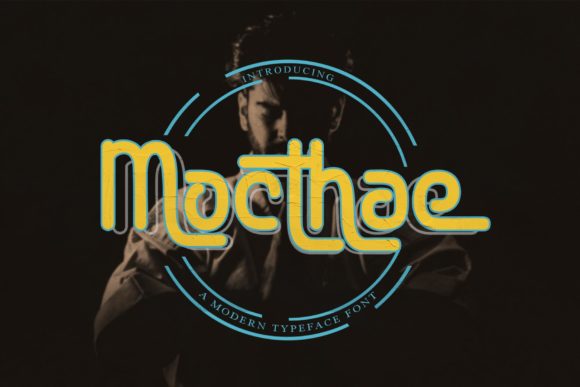
One of the most notable aspects of Mocthae is its legibility against complex backgrounds. Many display fonts struggle when placed over busy images or textured surfaces because their intricate details get lost. Mocthae, however, is engineered to maintain clarity even in these challenging contexts. This makes it an excellent candidate for posters, album covers, web banners, and social media graphics where the background is rarely static or plain.
Key Characteristics
- High Contrast Potential: The letterforms are designed to stand out, allowing for strong hierarchy when paired with simpler fonts.
- Versatile Tone: While described as fun, the font maintains a level of professionalism that prevents it from feeling childish or overly casual.
- Structural Clarity: Despite its decorative qualities, the internal spacing (counter-space) remains open enough to ensure readability at various sizes.
Comparing Mocthae to Standard Display Alternatives
When evaluating Mocthae, it is helpful to place it within the broader context of available display options. Designers typically choose between three main categories: classic serif displays, geometric sans-serif displays, and expressive or novelty fonts. Mocthae occupies a nuanced space that blends elements of all three but leans heavily toward the expressive end of the spectrum.
Mocthae vs. Geometric Sans-Serif Displays
Geometric sans-serifs (such as Futura or Montserrat variants) are popular for their clean, modern look. They are safe choices for corporate identities and tech startups. However, they can sometimes feel sterile or generic. Mocthae offers a warmer alternative. Where a geometric font might feel rigid, Mocthae feels organic and dynamic. If your project requires a sense of trust and stability above all else, a geometric sans might be safer. But if the goal is to evoke emotion or excitement, Mocthae provides a stronger emotional hook.
Mocthae vs. Traditional Serif Displays
Traditional serif displays often convey heritage, elegance, or authority. They are ideal for luxury brands, legal firms, or editorial layouts. Mocthae does not attempt to replicate this gravitas. Instead, it targets a more youthful, energetic demographic. Choosing Mocthae over a traditional serif signals that your brand is forward-thinking and adaptable. The tradeoff here is a loss of perceived "prestige" in favor of perceived "relevance."
Mocthae vs. Novelty or Handwritten Fonts
Novelty fonts push the boundaries of form, often becoming illegible at smaller sizes. They are risky tools that require careful handling. Mocthae sits comfortably below this risk threshold. It retains the whimsy of a handwritten or brush script but enforces a typographic structure that ensures consistency. This makes Mocthae a more reliable tool for professional designers who need to scale their work across different mediums without losing quality.
Strategic Use Cases and Best-Fit Scenarios
Deciding when to use Mocthae depends on understanding its limitations as much as its strengths. Because it is a display font, it should not be used for paragraphs of text. Overusing it can lead to visual fatigue and reduce the overall effectiveness of the communication. Instead, think of Mocthae as a spotlight—it should illuminate key messages, not fill every corner of the canvas.
- Headline Dominance: Mocthae excels as a standalone headline. When used on a solid color background or a simple gradient, it allows the letterforms to shine. The contrast between the bold weight of the font and negative space creates a powerful focal point.
- Busy Background Integration: As noted earlier, Mocthae performs well over busy imagery. This is particularly useful in digital advertising, where click-through rates depend on quickly grabbing attention amidst visual clutter. The font’s distinct shape helps it cut through the noise.
- Event and Entertainment Branding: For festivals, concerts, workshops, or creative agency portfolios, Mocthae’s "fun" attribute aligns perfectly with the expected energy of the event. It suggests that the experience will be engaging and memorable.
- Product Packaging: On retail shelves, products compete for seconds of attention. A packaging design featuring Mocthae can appear distinctive and premium simultaneously, especially if paired with minimalist photography.
Evaluating Tradeoffs and Limitations
No single typeface is perfect for every situation. Understanding the tradeoffs of using Mocthae is crucial for avoiding common design pitfalls.
Limited Versatility: The primary limitation of Mocthae is its narrow range of application. It is not a "workhorse" font like Arial or Roboto. You cannot use it for footnotes, navigation menus, or long articles. This requires designers to pair it with a complementary typeface. A good rule of thumb is to pair Mocthae with a neutral, highly readable sans-serif or serif for body text. This creates a balanced hierarchy where Mocthae handles the "voice" and the secondary font handles the "information."
Audience Perception: Because Mocthae has a distinct personality, it may not suit all industries. For example, a financial institution or a healthcare provider might find Mocthae too informal or distracting. In these sectors, clarity and neutrality are paramount. Using a font that introduces unnecessary visual noise can undermine the user’s trust. Always consider the psychological expectations of your target audience before committing to a display font.
Legibility at Small Sizes: While Mocthae is robust, it is still a display font. At very small sizes (below 14px on screen), the finer details of the letterforms may blur or become indistinct. Test the font thoroughly across different devices and resolutions. If the text becomes difficult to read, switch to a simpler alternative for that specific context.
Decision Framework: Is Mocthae Right for Your Project?
To help streamline the decision-making process, consider the following checklist. If your project meets most of these criteria, Mocthae is likely a strong candidate.
- Is the text primarily headlines, titles, or short phrases?
- Does the brand identity value creativity, energy, or modernity over tradition?
- Will the text be displayed at relatively large sizes?
- Is there a need for the text to stand out against complex or colorful backgrounds?
- Are you prepared to pair Mocthae with a neutral body font?
If the answer to these questions is yes, Mocthae can serve as a powerful asset in your design toolkit. It offers a rare combination of fun and function, allowing you to create visuals that are both aesthetically pleasing and strategically effective.
Conclusion on Selection Strategy
Selecting a typeface is a strategic decision that impacts how your message is received. Mocthae stands out as a versatile display font that bridges the gap between playful expression and professional clarity. By understanding its strengths in handling busy backgrounds and its suitability for headline-driven designs, you can leverage its unique character to enhance your visual communication.
Remember that typography is always part of a system. Mocthae works best when it is given room to breathe and paired appropriately with supporting elements. Avoid forcing it into roles for which it was not designed. When used correctly, Mocthae can elevate a project from ordinary to outstanding, providing the visual punch needed to engage adult audiences aged 20–50 who appreciate thoughtful, well-crafted design.