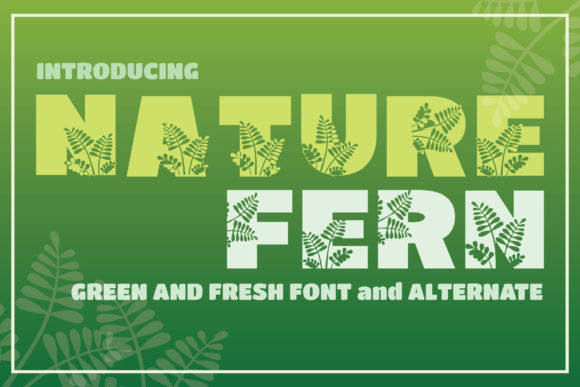
Nature Fern: A Comprehensive Evaluation for Designers
In the vast landscape of digital typography, finding a typeface that bridges the gap between organic aesthetics and functional usability is a constant challenge. Nature Fern emerges as a distinct solution for designers seeking to incorporate botanical themes into their work without sacrificing technical reliability. As a nature-inspired display font, it offers a specific visual language that resonates with audiences looking for elegance, growth, and natural beauty. This evaluation explores the characteristics, technical specifications, and practical applications of Nature Fern, helping you determine if it aligns with your current design objectives.
Understanding the Typography
At its core, Nature Fern is classified as a display font. Display fonts are designed primarily for large sizes, such as headlines, posters, and banners, rather than for body text or long-form reading. The aesthetic of Nature Fern draws heavily from the intricate details of fern fronds and leafy textures. The letterforms often feature organic curves, varying stroke weights, and decorative elements that mimic the delicate structure of plant life.
This stylistic choice makes it particularly effective for projects where mood and atmosphere are paramount. Unlike geometric or humanist sans-serif fonts that prioritize neutrality, Nature Fern carries an inherent personality. It evokes feelings of tranquility, freshness, and sophistication. However, this strong character also dictates its usage; it is not a neutral vehicle for information but rather a focal point that demands attention.
Technical Specifications and Accessibility
One of the most significant advantages of using Nature Fern in professional workflows is its encoding method. The font is PUA encoded, which stands for Private Use Area encoding. To understand why this matters, it is helpful to look at how standard fonts operate. Typically, a font maps specific characters (like 'A', 'B', or '1') to specific Unicode code points. Decorative variations, known as swashes or ligatures, are often limited or require complex OpenType features that may not be supported by all software.
With PUA encoding, the designer assigns additional glyphs—including alternate letters, flourishes, and ornamental swashes—to unused slots in the font’s character map. This means that users can access the full range of decorative options directly through their keyboard or character panel without relying on external plugins or advanced typographic controls. For many designers, this simplifies the creative process significantly. You can easily swap a standard 'F' for a fern-like flourish simply by selecting the corresponding glyph, ensuring consistency and ease of use across different platforms.
The Benefits of Ease of Access
- Streamlined Workflow: Designers do not need to hunt for alternative characters or manually draw swashes in vector software.
- Consistency: All glyphs belong to the same font family, ensuring uniform weight, style, and baseline alignment.
- Compatibility: Since the glyphs are embedded within the font file itself, they render correctly regardless of whether the viewer has specialized software installed.
Evaluating Use Cases and Applications
Determining the right context for Nature Fern requires an understanding of where organic, decorative typography performs best. Because it is a display font, it is ill-suited for paragraphs of text. Instead, its strength lies in high-impact, short-text scenarios.
Ideal Scenarios
- Branding for Lifestyle Businesses: Companies in the wellness, spa, organic food, or gardening sectors often benefit from the subtle associations of growth and health that Nature Fern provides. A logo or tagline using this font can instantly communicate a brand’s connection to nature.
- Event Invitations and Stationery: Weddings, garden parties, and eco-conscious events often seek stationery that feels hand-crafted or elegant. The swashes available in Nature Fern add a touch of luxury and personalization that standard fonts lack.
- Editorial Headlines: Magazines and blogs covering topics related to sustainability, botany, or lifestyle can use Nature Fern for pull quotes or section headers to break up text and add visual interest.
- Packaging Design: For products like teas, essential oils, or artisanal soaps, packaging needs to stand out on shelves. The unique texture of the letters can help a product appear premium and carefully curated.
Situations Requiring Alternatives
While Nature Fern is versatile within its niche, it is not a universal tool. There are clear situations where other typefaces would serve a project better.
- High-Density Information: If your project involves dense data, legal disclaimers, or lengthy articles, Nature Fern will hinder readability. In these cases, a clean serif or sans-serif font is necessary.
- Minimalist Aesthetics: Brands aiming for a stark, modern, or industrial look may find Nature Fern too ornate. Its organic curves clash with the rigid geometry associated with minimalism.
- International Audiences: While the Latin alphabet is widely used, highly decorative fonts can sometimes obscure letterforms, making them difficult to recognize quickly. For global brands requiring instant legibility, simpler fonts are safer choices.
Considerations and Tradeoffs
When integrating Nature Fern into a design system, several factors must be weighed against its aesthetic appeal.
Legibility vs. Decoration
The primary tradeoff with any decorative font is legibility. The swashes and varied stroke widths that give Nature Fern its charm can also make words harder to read at small sizes or low resolutions. Designers must ensure that the font size is sufficient and that there is adequate contrast between the text and the background. Overusing swashes can create visual clutter, reducing the overall impact of the message.
Pairing Strategies
A common mistake is attempting to pair Nature Fern with other decorative fonts. To maintain balance, it is best to pair Nature Fern with simple, understated typefaces. A neutral sans-serif for body text or subheadings allows the fern-inspired display font to remain the star. This contrast creates a hierarchy that guides the reader’s eye effectively.
Licensing and Usage Rights
Before downloading or purchasing Nature Fern, it is crucial to review the licensing agreement. Fonts are intellectual property, and usage rights vary depending on whether the license covers personal use, commercial print, web embedding, or app development. Ensuring compliance prevents legal issues and respects the creator’s work.
Final Decision Framework
To decide if Nature Fern is the right choice for your project, consider the following questions:
- Is the text short? If you are working with headlines, logos, or labels, this font is likely a strong fit.
- Does the brand voice match the aesthetic? Does your project value elegance, nature, and organic forms? If yes, Nature Fern aligns well.
- Do you need easy access to variations? If you want to experiment with swashes without technical hassle, the PUA encoding is a significant benefit.
- Are you prioritizing readability over decoration? If clarity is the top priority, look elsewhere.
Nature Fern occupies a specific niche in the typography market. It is not a replacement for foundational typefaces but rather a powerful accent tool. By understanding its strengths in display contexts and its limitations in body text, designers can leverage its unique character to create memorable, visually cohesive designs. Whether for a boutique brand identity or a seasonal campaign, Nature Fern offers a refined way to bring the beauty of the natural world into digital and print media.