Darkrooms Display Font: A Practical Evaluation for Urban and Editorial Design
In the landscape of digital typography, finding a typeface that balances raw urban energy with legible structure is a common challenge for designers. Darkrooms has emerged as a distinct option in this space, positioning itself as a brushed display font that captures the aesthetic of street art and industrial grit while remaining functional for broader design applications. For professionals aged 20 to 50 who are evaluating fonts for branding, editorial layouts, or creative projects, understanding the specific characteristics and use cases of Darkrooms is essential before integrating it into a workflow.
This evaluation examines the visual mechanics of Darkrooms, its suitability for various crafty ideas ranging from stationery to large-scale titles, and how it compares to other brush-style or distressed display fonts available on the market. The goal is to provide a clear, unbiased overview to help you determine if this original look aligns with your project’s needs.
Visual Characteristics and Aesthetic Appeal
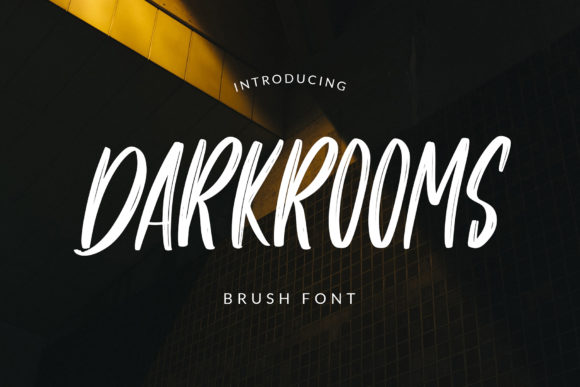
Darkrooms is defined by its brushed quality. Unlike standard sans-serif or serif fonts that rely on clean, geometric lines, Darkrooms simulates the texture of paint applied with a coarse brush. This creates an immediate sense of movement and imperfection, which is often associated with urban culture, graffiti, and DIY aesthetics. The "daring" nature of the font comes from its irregular edges and varying stroke widths, which mimic the pressure and speed of a human hand applying pigment to a surface.
The appeal of this style lies in its ability to convey attitude without sacrificing readability. While many distressed fonts become illegible at smaller sizes due to excessive noise or erosion of letterforms, Darkrooms maintains a strong structural backbone. This makes it suitable for headlines and display text where impact is prioritized over body copy. The urban styling suggests authenticity and edge, making it a compelling choice for brands or projects that want to communicate creativity, rebellion, or hands-on craftsmanship.
Texture vs. Legibility Tradeoffs
When evaluating any brush font, the primary tradeoff is always between texture and clarity. Darkrooms navigates this balance by keeping the internal counters (the open spaces inside letters like 'e' or 'a') relatively clear. This prevents the font from becoming a muddy blob when scaled down slightly, although it remains best suited for large formats. Designers should be aware that the rough edges can interact unexpectedly with complex backgrounds or low-contrast color schemes, requiring careful placement to ensure the text remains accessible.
Application Scenarios and Use Cases
The versatility of Darkrooms extends beyond traditional graphic design into various craft-oriented fields. Its original look allows it to bridge the gap between digital design and physical media, appealing to users who value tactile experiences in their visual output.
- Letterheads and Branding: For creative agencies, music labels, or lifestyle brands targeting a younger demographic, Darkrooms can serve as a powerful logo element or header. It adds personality to letterheads that might otherwise feel sterile, suggesting a brand that is approachable yet bold.
- Stationery and Invitations: In the realm of personalized stationery, Darkrooms offers a unique alternative to elegant scripts or formal serifs. It works particularly well for event invitations related to concerts, art exhibitions, or urban-themed parties, where the font reinforces the atmosphere of the event.
- Social Media Graphics: The high contrast and bold strokes of Darkrooms make it highly visible on small screens. It performs well in Instagram stories, YouTube thumbnails, and promotional banners where quick visual recognition is critical.
- Merchandise Design: T-shirts, tote bags, and stickers benefit from the stamped, hand-painted look of Darkrooms. The font mimics the aesthetic of screen printing or stenciling, which resonates with consumers who appreciate artisanal or limited-edition goods.
Comparison with Alternative Styles
Choosing the right font often involves comparing Darkrooms against other categories of display typefaces. Understanding these distinctions helps in making a more informed decision based on the specific tone you wish to convey.
Brush Fonts vs. Handwritten Scripts
While both styles evoke a human touch, they serve different purposes. Handwritten scripts typically emphasize flow, cursive connections, and elegance. They are often used for weddings, luxury brands, or feminine-coded products. Darkrooms, by contrast, is blockier and more aggressive. It lacks the fluidity of a script but gains strength from its solidity. If your project requires a sense of grace or tradition, a script may be more appropriate. If the goal is to convey energy, noise, or modern urban culture, Darkrooms is the stronger candidate.
Distressed Sans-Serifs vs. Brush Displays
Another common comparison is with distressed or grunge sans-serif fonts. These fonts achieve a worn look through eroded edges and pixelation effects rather than brush strokes. Distressed sans-serifs often feel more industrial or tech-oriented, whereas brush displays like Darkrooms feel more artistic and expressive. The key difference lies in the organic nature of the brushstroke. Darkrooms implies a tool (a brush) was used, adding a layer of narrative about creation and process that purely eroded sans-serifs lack.
Evaluating Limitations and Best-Fit Situations
No single typeface is a universal solution. Darkrooms has specific limitations that designers must account for during the planning phase. Recognizing these constraints ensures the font is used effectively rather than misapplied.
- Not for Body Text: As a display font, Darkrooms should never be used for paragraphs of text. The textured edges and irregular spacing will cause eye fatigue quickly. It is strictly for headings, titles, and short phrases.
- Color Sensitivity: The effectiveness of Darkrooms relies heavily on contrast. On light gray or beige backgrounds, the dark, gritty details may get lost. It performs best against white, black, or highly saturated colors that allow the texture to pop.
- Kerning Challenges: Brush fonts often have inconsistent natural spacing. When using Darkrooms, manual kerning adjustments may be necessary to prevent letters from colliding or appearing too loose. Automated tracking settings might not yield the optimal visual balance.
For projects requiring a minimalist, corporate, or highly formal tone, Darkrooms would likely be inappropriate. In such cases, a clean geometric sans-serif or a classic serif would better serve the communication goals. However, for projects that aim to disrupt expectations, highlight creativity, or tap into contemporary street culture, Darkrooms offers a distinctive voice that stands out in a crowded visual field.
Decision Factors for Implementation
Before finalizing Darkrooms for a project, consider the following practical factors to ensure alignment with your overall design strategy.
Brand Voice Alignment: Does your brand identity support an edgy, informal, or artistic persona? If your brand is conservative or B2B focused, the urban styling of Darkrooms may create a disconnect with your audience's expectations. Conversely, if your brand prides itself on being unconventional, this font reinforces that core value.
Technical Compatibility: Ensure that the font file format (typically OTF or TTF) is compatible with your design software and web platforms. Some specialized brush fonts do not render well in all web browsers or mobile devices. Testing the font across different mediums—print, web, and social media—is crucial to verify that the texture translates accurately.
Pairing Potential: To maximize the impact of Darkrooms, pair it with a neutral, simple typeface for supporting text. A clean sans-serif or a subtle serif can provide the necessary stability to balance the chaotic energy of the display font. Avoid pairing it with other decorative or textured fonts, as this can result in visual clutter and confusion.
Conclusion on Suitability
Darkrooms represents a specific niche in the typography market: the intersection of urban grit and functional display design. Its brushed, daring aesthetic offers a compelling alternative to standard fonts for designers seeking to inject personality and texture into their work. By understanding its strengths in headline impact and its limitations in body text and formal contexts, you can leverage Darkrooms to create designs that are both visually striking and strategically sound. Whether used for a startup’s logo, a concert poster, or a set of custom stationery, the font provides a tangible sense of craft and attitude that resonates with modern audiences.