Good Cowboy: A Comprehensive Evaluation of a Youthful Display Typeface
In the vast ecosystem of digital typography, selecting the right font is rarely just about readability; it is about conveying tone, personality, and intent. Among the myriad of display fonts available to designers and content creators, Good Cowboy has emerged as a distinctive option for projects requiring a specific blend of approachability and energetic charm. This article provides an objective evaluation of Good Cowboy, analyzing its visual characteristics, ideal use cases, and potential limitations to help you determine if it aligns with your design goals.
Understanding the Visual Identity of Good Cowboy
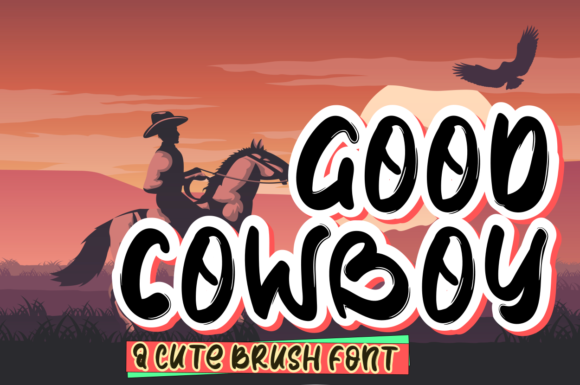
Good Cowboy is categorized as a cute, friendly display font. Unlike serif or sans-serif typefaces designed primarily for body text and long-form reading, display fonts are intended to be used at larger sizes where their unique stylistic features can be appreciated. The defining characteristic of Good Cowboy is its incredibly youthful feel. It avoids the rigidity of traditional corporate fonts, opting instead for a softer, more playful aesthetic.
The letterforms in Good Cowboy are chunky and rounded, which contributes significantly to its friendly demeanor. These structural choices soften the edges of communication, making the text appear less authoritative and more inviting. When added to designs, this font tends to make layouts come alive by introducing a sense of movement and warmth that standard geometric fonts often lack. However, this "cute" classification should not be confused with childishness; rather, it suggests a light-hearted, accessible vibe suitable for modern, casual branding.
Reasons to Consider Good Cowboy
Designers and marketers may find themselves drawn to Good Cowboy for several strategic reasons. Understanding these motivations can help clarify whether the font is a suitable tool for your current project.
- Brand Personality Alignment: If your brand aims to appear approachable, fun, and unpretentious, Good Cowboy serves as a strong visual anchor. It signals to the audience that the brand does not take itself too seriously, which can be highly effective in lifestyle, entertainment, and creative industries.
- Youthful Engagement: The font’s youthful energy makes it particularly effective for targeting younger demographics. It resonates well with audiences who value authenticity and casual aesthetics over formal tradition.
- Visual Distinctiveness: In a sea of ubiquitous sans-serifs like Helvetica or Open Sans, Good Cowboy offers immediate differentiation. Its chunky lettering ensures that headlines and key messages stand out without requiring heavy graphic embellishments.
- Emotional Connection: Friendly typography fosters a sense of trust and ease. By using a font that feels welcoming, designers can lower the cognitive barrier for users, making them feel more comfortable engaging with the content.
Benefits and Practical Applications
When implemented correctly, Good Cowboy offers tangible benefits in terms of user experience and visual hierarchy. Because it is a display font, its primary strength lies in short bursts of text where impact matters more than volume.
Ideal Use Cases
- Event Posters and Flyers: For local community events, art shows, or casual meetups, Good Cowboy captures attention quickly. Its lively nature matches the excitement of such gatherings.
- Social Media Graphics: Platforms like Instagram and Pinterest favor visually striking, bite-sized content. Headlines on quote cards or promotional banners benefit from the font's bold, chunky presence.
- Educational Materials for Children: While not exclusively for children, the friendly nature of the font makes it appropriate for educational resources aimed at young learners, where clarity and warmth are paramount.
- Product Packaging: For consumer goods targeting families or seeking a "fun" image, such as snacks, toys, or craft supplies, Good Cowboy can enhance shelf appeal.
Tradeoffs and Critical Considerations
No typeface is universally applicable, and Good Cowboy comes with specific tradeoffs that designers must weigh before selection. Recognizing these limitations is crucial for avoiding common design pitfalls.
Limited Versatility
The most significant constraint of Good Cowboy is its lack of versatility. It is strictly a display font. Attempting to use it for body text, paragraphs, or even subheadings will result in poor readability and visual fatigue. The chunky letters and unique styling become distracting when scaled down, making it unsuitable for information-dense layouts.
Tone Appropriateness
The "cute" and "youthful" attributes, while beneficial in certain contexts, can be detrimental in others. Using Good Cowboy for financial services, legal documents, healthcare announcements, or high-end luxury brands may undermine credibility. In these sectors, seriousness, stability, and precision are typically valued over playfulness. A mismatch between font tone and industry expectation can lead to a perception of unprofessionalism.
Overuse Risks
Because the font is visually loud, it demands restraint. Overusing Good Cowboy across multiple elements in a single layout can create a chaotic and overwhelming experience for the viewer. It works best when paired with neutral, simple fonts for secondary information, allowing the display font to shine without competition.
Alternatives and Comparative Analysis
If Good Cowboy does not fully align with your needs, several alternatives exist depending on the specific nuance you wish to convey. Evaluating these options helps refine your decision-making process.
- For a More Professional Yet Friendly Tone: If you need approachability but cannot afford the risk of appearing too casual, consider rounded sans-serifs like Nunito or Quicksand. These fonts maintain readability at small sizes while still offering a soft, modern aesthetic.
- For Stronger Boldness: If the goal is maximum impact and authority rather than cuteness, blocky slab serifs or heavy geometric sans-serifs might be more appropriate. Fonts like Rockwell or Futura Bold provide weight without the playful curvature.
- For Handwritten Authenticity: If you seek the human touch associated with Good Cowboy but want a different texture, explore handwritten script fonts or brush scripts. These offer variety in stroke width and a more organic feel, though they require careful kerning management.
Decision-Making Insights
To determine if Good Cowboy is the right choice for your project, ask yourself the following questions:
- Is brevity prioritized? Will the text remain short enough to be legible and impactful?
- Does the brand voice match the font? Is your brand perceived as fun, young, and informal?
- Is there a complementary pairing strategy? Do you have a plan for pairing this display font with a highly readable body font?
If the answer to these questions is affirmative, Good Cowboy is likely a strong fit. It brings a unique energy to designs that can transform static layouts into dynamic conversations. However, if your project requires extensive text, formal tone, or broad demographic appeal, it is advisable to look elsewhere. Typography is a strategic tool; choosing Good Cowboy should be a deliberate decision based on clear communication objectives rather than mere aesthetic preference. By understanding its strengths and limitations, you can leverage its youthful charm effectively, ensuring your designs resonate with the intended audience while maintaining professional integrity.