Lazzy Dog: Integrating Playful Typography into Professional and Educational Workflows
In the landscape of digital design and content creation, typography is rarely just about readability; it is a primary vehicle for tone, brand identity, and user engagement. For professionals ranging from educators to small business owners, selecting the right typeface is a strategic decision that impacts how an audience perceives the underlying message. Lazzy Dog emerges as a specialized tool in this ecosystem, offering a distinct aesthetic that balances whimsy with structural integrity. It is not merely a decorative font but a deliberate choice for projects requiring a blend of authenticity and approachability.
This article explores the practical application of Lazzy Dog within various workflows, examining its technical specifications, use cases, and integration strategies. By understanding where this display font fits into the broader process of design and communication, creators can leverage its unique qualities to enhance project outcomes without compromising professionalism.
Understanding the Typography Profile
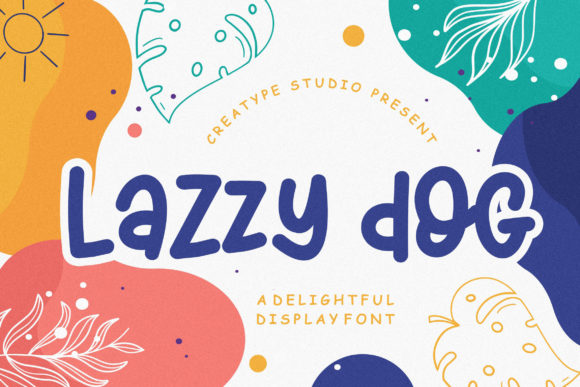
Lazzy Dog is classified as a delightful display font, characterized by its playful yet authentic visual language. Unlike rigid sans-serifs or traditional serifs, it embodies a sense of informality that resonates strongly with audiences seeking connection rather than formality. This makes it particularly effective in contexts where trust and friendliness are paramount.
The font’s design philosophy centers on accessibility and charm. It avoids the overly chaotic nature of some novelty fonts, maintaining enough legibility to be used in headers and titles without causing cognitive strain. For marketers and bloggers, this balance is crucial. A headline must grab attention (playfulness) while remaining clear enough to convey the subject matter quickly (authenticity). Lazzy Dog achieves this equilibrium, making it a viable option for children’s activity guides, school project covers, and educational materials.
Furthermore, the font’s character set is robust. It is PUA encoded, a technical specification that allows designers to access all glyphs and swashes with ease. In practical terms, this means that users are not limited to standard keyboard inputs. Instead, they can tap into a wider array of stylistic variations, ensuring that the final output feels curated and intentional rather than generic.
Technical Accessibility and Workflow Efficiency
For freelancers and publishers who manage multiple projects simultaneously, workflow efficiency is often determined by how easily assets can be integrated across different platforms. The PUA encoding of Lazzy Dog simplifies this process. While PUA (Private Use Area) characters require specific handling in some software environments, modern design tools and web development frameworks have largely standardized support for these encodings.
- Design Software Compatibility: Tools like Adobe Illustrator, Photoshop, and Affinity Designer handle PUA fonts seamlessly. Designers can select specific swashes directly from the glyph panel, streamlining the creative process.
- Web Implementation: When integrating Lazzy Dog into websites, developers must ensure proper font loading via CSS. Using @font-face rules with the correct format ensures that the playful elements render correctly across browsers.
- Document Preparation: For educators creating printable worksheets or flyers, the availability of swashes allows for quick customization. A single title can be adjusted to match the theme of a specific lesson without needing to switch font families.
Understanding these technical nuances prevents common pitfalls, such as missing characters or inconsistent rendering, which can derail a project timeline. By acknowledging the PUA structure upfront, teams can plan their asset management more effectively.
Strategic Use Cases Across Industries
The versatility of Lazzy Dog extends beyond its intended niche. While it is ideally suited for children’s activities, its application can be expanded based on the target audience and the desired emotional response. Here is how different professional groups can integrate this font into their workflows.
Educators and School Administrators
For teachers and school staff, Lazzy Dog serves as a powerful tool for engagement. Classroom materials, such as bulletin boards, name tags, and activity sheets, benefit from a visual style that reduces anxiety and encourages participation. The font’s authenticity helps maintain a sense of reality even within playful designs, preventing the material from feeling childish in a negative way.
In the planning phase, educators can use Lazzy Dog to create templates for recurring events. For example, a "Weekly Goals" board can utilize the font to make daily targets feel achievable and fun. During execution, the ease of accessing swashes allows for minor adjustments to emphasize key words, adding a layer of visual hierarchy without cluttering the layout.
Small Business Owners and Marketers
Entrepreneurs in the lifestyle, craft, or family-oriented sectors often struggle to find a voice that is both professional and inviting. Lazzy Dog offers a solution for branding elements that need to stand out. Consider a local bakery launching a new line of cookies for kids. Using Lazzy Dog for the packaging headers can immediately signal playfulness, while the rest of the text remains in a neutral font to ensure clarity.
Marketing campaigns benefit from this contrast. A social media post might feature a headline in Lazzy Dog to capture the scroll, followed by body text in a highly readable sans-serif. This combination leverages the font’s strengths—attention-grabbing and thematic consistency—while adhering to best practices in information architecture.
Blogger and Content Creators
Bloggers focusing on parenting, education, or hobbyist topics can use Lazzy Dog to differentiate their content visually. In a crowded digital space, unique typography can become part of a brand’s signature style. However, caution is advised. Overuse of display fonts can lead to reader fatigue. The optimal workflow involves using Lazzy Dog sparingly for headers, pull quotes, or section dividers.
When preparing blog posts, creators should test the font at various sizes. Display fonts often lose their charm when scaled down too much. Ensuring that the font remains legible on mobile devices is a critical step in the quality control process. If the swashes become indistinguishable on smaller screens, it may be necessary to revert to the base character set for responsive design.
Integration and Best Practices
Successfully integrating Lazzy Dog into a project requires more than just dropping the file into a design folder. It demands a thoughtful approach to pairing, spacing, and context. Below are practical guidelines for implementation.
Pairing Strategies
One of the most common mistakes in typography is pairing two display fonts. Lazzy Dog has strong personality; therefore, it should be paired with neutral, clean typefaces. A simple sans-serif like Helvetica, Arial, or a modern grotesque works well as a companion. This creates a visual dialogue where Lazzy Dog provides the emotion, and the secondary font provides the information.
For instance, in a brochure for a summer camp, the main title could be in Lazzy Dog, while the schedule and contact details are in a clean, grid-based sans-serif. This separation of concerns ensures that the design is aesthetically pleasing without sacrificing functionality.
Kerning and Leading Adjustments
Display fonts often have unique spacing requirements. Because Lazzy Dog features swashes and varied stroke widths, standard kerning settings may not yield the best results. Designers should manually adjust letter spacing to ensure that the playful elements do not collide or create awkward gaps.
Leading (line height) also needs attention. Due to the ascenders and descenders typical in playful fonts, increasing the leading slightly can improve readability. This is especially important for longer blocks of text, although Lazzy Dog is primarily intended for short phrases. If extended text is necessary, consider using the regular glyphs only, reserving the swashes for emphasis.
Consistency and Brand Guidelines
For agencies and long-term projects, establishing a style guide is essential. Documenting the specific uses of Lazzy Dog ensures consistency across all touchpoints. Define clear rules: Is it used for headlines only? Can it be used in all caps? Which swashes are approved for official communications?
By setting these boundaries early in the planning phase, teams avoid ad-hoc decisions that can dilute the brand identity. Consistency builds recognition, and in the case of Lazzy Dog, it reinforces the association between the font and the values of playfulness and authenticity.
Long-Term Value and Adaptability
Investing in a font like Lazzy Dog is not just about immediate project needs; it is about building a library of assets that can adapt to future trends. As remote work and digital learning continue to evolve, the demand for human-centric design increases. Audiences are increasingly drawn to content that feels personal and genuine.
Lazzy Dog’s ability to convey authenticity makes it a timeless addition to a designer’s toolkit. While trends in color and layout shift, the fundamental need for friendly, approachable communication remains constant. By mastering the integration of this font now, professionals position themselves to meet these evolving demands efficiently.
Moreover, the PUA encoding ensures that the font remains accessible even as technology changes. As long as software continues to support standard Unicode ranges, the glyphs and swashes will remain available. This longevity reduces the need for frequent asset updates, saving time and resources in the long run.
Conclusion on Practical Application
Lazzy Dog is more than a decorative element; it is a strategic asset for anyone looking to inject warmth and personality into their work. Whether you are an educator designing a classroom poster, a marketer crafting a campaign, or a blogger writing about family life, this font offers a reliable way to connect with your audience. By understanding its technical features, respecting its visual weight, and integrating it thoughtfully into your workflow, you can enhance the impact of your projects. The key lies in balance: letting Lazzy Dog shine where it matters most, while supporting it with clear, functional design principles.