Broken Mirror Font Evaluation
In the vast ecosystem of digital typography, finding a typeface that balances aesthetic appeal with functional usability is often a challenge. Designers frequently seek fonts that offer character without sacrificing readability or ease of implementation. One such option that has garnered attention in specific creative circles is Broken Mirror. Described as a friendly display font, it offers a unique visual texture that can elevate craft designs and artistic projects when used correctly.
This evaluation explores what Broken Mirror is, its intended use cases, and how it fits into broader design workflows. By examining its characteristics, benefits, and potential limitations, designers can make informed decisions about whether this typeface aligns with their project goals.
Understanding Broken Mirror
Broken Mirror is classified as a display font. In typographic terms, display fonts are designed to be used at larger sizes where legibility is less critical than impact and style. Unlike text fonts, which are optimized for long-form reading, display fonts serve as visual anchors, drawing attention through distinct shapes, weights, or stylistic quirks.
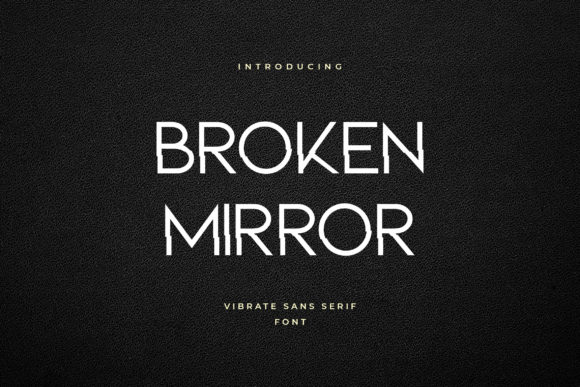
The defining characteristic of Broken Mirror is its "friendly" demeanor. While many display fonts lean towards harshness, gothic severity, or extreme stylization, Broken Mirror aims for approachability. It retains a sense of playfulness while maintaining a structure that feels grounded. The name itself suggests fragmentation or reflection, hinting at a design language that might incorporate subtle irregularities or textured edges, giving it a hand-crafted feel even in a digital format.
Its simplicity is a key selling point. Despite any decorative elements, the underlying letterforms remain clean and easy to read. This balance makes it versatile for various applications, particularly those involving crafts, branding, and editorial design where a touch of personality is desired without overwhelming the viewer.
Why Consider Broken Mirror?
Designers evaluating typefaces often look for tools that can solve specific aesthetic problems. Here are several reasons why Broken Mirror might be on your shortlist:
- Aesthetic Versatility: Its friendly nature allows it to bridge the gap between professional corporate identities and whimsical personal projects. It can soften rigid layouts or add warmth to minimalist designs.
- Craft Integration: As noted in its description, it pairs exceptionally well with craft designs. Whether you are creating labels for handmade goods, invitations for events, or social media graphics for artisans, Broken Mirror complements organic textures like paper, wood, or fabric.
- Visual Hierarchy: Because it is a display font, it excels at establishing hierarchy. Using it for headlines or key phrases can immediately draw the eye, allowing body text (typically set in a neutral sans-serif or serif) to recede into the background.
- User-Friendly Implementation: The claim that it is simple and easy to use suggests that the font files are likely well-structured, with good kerning and spacing out of the box. This reduces the technical friction for designers who want to apply the font quickly without extensive manual adjustment.
Benefits and Tradeoffs
No single typeface is a universal solution. Understanding the tradeoffs of using Broken Mirror is crucial for effective design.
Benefits
The primary benefit of Broken Mirror is its ability to convey emotion through form. In an era where digital content is saturated, a font with a distinct but approachable personality can help a brand stand out. Its compatibility with craft aesthetics makes it an ideal choice for small business owners, Etsy sellers, and independent artists who need their visual identity to feel authentic and human-made.
Furthermore, its simplicity ensures that it does not compete aggressively with other design elements. If your layout includes complex patterns, photographs, or illustrations, Broken Mirror can provide textual support without creating visual chaos.
Tradeoffs
As a display font, Broken Mirror is not suitable for body text. Attempting to set paragraphs in this typeface would likely result in reader fatigue due to its stylistic weight. Designers must pair it carefully with complementary fonts. A common strategy is to use Broken Mirror for headings and pair it with a clean, neutral sans-serif like Helvetica, Arial, or Open Sans for smaller text.
Another consideration is overuse. Because the font has a strong character, using it excessively can dilute its impact. If every headline in a document uses Broken Mirror, the design may feel monotonous rather than dynamic. Strategic sparing usage is recommended to maintain its effectiveness.
Situations Where Broken Mirror Is a Strong Fit
Determining the right context for Broken Mirror involves matching its personality to the project's intent. It is particularly well-suited for:
- Branding for Creative Industries: Businesses in the arts, crafts, wellness, and lifestyle sectors often benefit from its friendly tone. It signals creativity and approachability.
- Event Materials: Invitations, posters, and banners for workshops, markets, or community events can leverage its playful yet clear structure.
- Packaging Design: For products that emphasize natural ingredients, handmade quality, or artisanal value, Broken Mirror adds a layer of visual storytelling that resonates with consumers looking for authenticity.
- Social Media Graphics: Short-form content requires immediate visual engagement. Broken Mirror’s display qualities make it effective for quotes, announcements, and promotional posts.
When to Consider Alternatives
While Broken Mirror has specific strengths, there are scenarios where other typefaces might be more appropriate. If your project requires a formal, authoritative, or highly technical tone, Broken Mirror’s friendly display style may undermine the message. In such cases, a classic serif or a geometric sans-serif would be more suitable.
Additionally, if your design needs to support multilingual content with diverse character sets, it is essential to verify that Broken Mirror supports the necessary languages and symbols. Many display fonts have limited glyph coverage compared to comprehensive text fonts. Always check the font’s specifications before committing to it for global campaigns.
If the goal is minimalism or ultra-modern sleekness, Broken Mirror’s textured or friendly attributes might introduce unwanted visual noise. In these instances, a cleaner, more restrained typeface would better serve the design’s intent.
Practical Decision-Making Insights
To determine if Broken Mirror is the right choice for your next project, consider the following questions:
- What is the emotional goal of the design? Does it need to feel warm, inviting, and creative? If so, Broken Mirror is a strong candidate.
- Where will the text appear? Ensure it is being used for headlines, titles, or short phrases rather than long passages of text.
- How will it pair with other elements? Test Broken Mirror alongside your chosen body font and imagery. Does it create harmony, or does it clash?
- Who is the target audience? Will your audience respond positively to a playful, craft-inspired aesthetic?
By answering these questions, you can move beyond subjective preference and make a strategic decision based on project requirements. Testing the font in mockups is also highly recommended. Seeing Broken Mirror applied to real-world contexts—such as a business card, a website header, or a product label—can reveal nuances that are not apparent when viewing the font in isolation.
Conclusion
Broken Mirror represents a thoughtful addition to the landscape of friendly display fonts. Its combination of simplicity, approachability, and aesthetic charm makes it a valuable tool for designers working in craft, lifestyle, and creative industries. However, like all display typefaces, its power lies in its selective application. When used appropriately to enhance visual hierarchy and convey warmth, it can significantly improve the overall quality of a design. By understanding its strengths and limitations, designers can confidently integrate Broken Mirror into their workflows, ensuring that their typography serves both functional and emotional objectives.