Why Baol Is the Bold Choice for High-Impact Visual Communication
In an era where digital attention spans are shrinking and physical spaces are saturated with visual noise, the role of typography has shifted from mere readability to immediate emotional resonance. Designers and brand strategists are no longer just selecting fonts that fit a layout; they are choosing voices that speak before a single word is read. Among the growing library of modern typefaces, Baol has emerged as a distinctive solution for those seeking to balance strength with approachability. It is not merely a display font; it is a tool for commanding space while maintaining a friendly demeanor.
This article explores the unique characteristics of Baol, its practical applications across various industries, and why its specific design architecture makes it suitable for everything from inspirational wall art to high-stakes corporate branding. Understanding the mechanics behind a successful display typeface helps creators make more informed decisions about how their messages are perceived.
The Anatomy of Approachable Boldness
To understand why Baol works, one must first look at the tension inherent in bold display typography. Typically, heavy weights convey authority but can often feel aggressive, cold, or intimidating. Conversely, light or rounded fonts may feel friendly but lack the presence needed to grab attention in a crowded environment. Baol resolves this dichotomy through its specific geometric construction and stroke contrast.
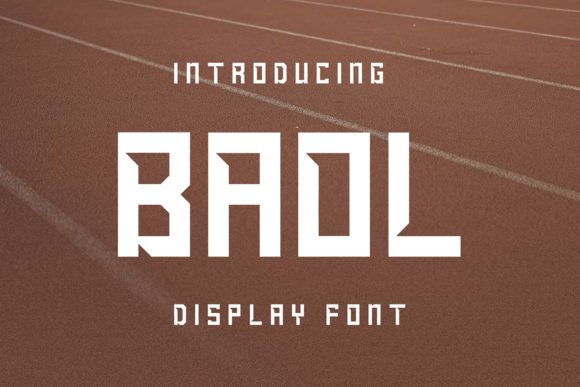
The font features a robust, solid structure that ensures legibility even at small sizes or from a distance, yet its terminals and curves soften the overall impression. This "bold and friendly" aesthetic is achieved through subtle rounding on sharp corners and a balanced x-height that invites the eye rather than blocking it. For educators and content creators, this means the text feels authoritative enough to be trusted, yet warm enough to be engaging.
When you apply Baol to a project, you are leveraging a typeface that has been engineered to reduce cognitive load. The clear shapes allow the brain to process information quickly, which is crucial in environments where viewers have only seconds to absorb a message. Whether it is a headline on a landing page or a title on a workshop banner, the font’s clarity ensures that the core message is understood instantly.
Strategic Applications in Brand Identity
One of the most significant advantages of using a distinctive display font like Baol is its ability to anchor a brand identity. In a market where logos and color palettes are often mimicked, typography remains a unique differentiator. Brands that utilize Baol often signal a combination of confidence and accessibility. This is particularly effective for startups, creative agencies, and lifestyle brands that want to appear established without being stuffy.
Consider the case of a modern coffee shop or a boutique fitness studio. These businesses thrive on community and energy. A traditional serif might feel too formal, while a standard sans-serif might blend into the background. Baol, however, acts as a visual hook. It suggests that the brand is energetic and strong (bold) but also welcoming and inclusive (friendly). This dual messaging aligns perfectly with the values of contemporary consumer bases who prioritize authenticity and connection.
For business owners looking to revitalize their visual language, incorporating Baol into key touchpoints can shift the perception of the entire brand. Using it for primary headlines, signage, and marketing materials creates a cohesive narrative. The consistency of such a strong typographic voice helps build recognition over time. When customers see the distinct shape of Baol, they begin to associate those visual cues with the quality and personality of the service provided.
Elevating Inspirational and Editorial Content
Beyond commercial branding, Baol has found a thriving niche in the realm of inspirational and editorial design. The rise of social media platforms driven by visual content, such as Instagram and Pinterest, has created a high demand for quote graphics, motivational posters, and editorial headers. In these contexts, the text itself is often the primary image.
When designing inspirational wall posters, the choice of font dictates the emotional weight of the quote. A delicate script might suggest fragility, while a blocky stencil might suggest utility. Baol sits in a powerful middle ground. Its bold weight gives the words importance and gravity, ensuring that the message feels significant. Meanwhile, its friendly curves prevent the message from feeling preachy or overly serious. This balance allows creators to share profound thoughts or ambitious goals without alienating the viewer.
For educators and researchers, this application is equally valuable. Academic institutions and educational platforms often struggle with the stereotype of being dry or inaccessible. By using Baol for course titles, seminar banners, and digital learning modules, they can inject a sense of dynamism into their materials. It signals that learning is an active, engaging, and positive experience. The font’s clarity also aids in retention, as students can easily scan and memorize key concepts presented in a highly legible format.
Practical Considerations for Implementation
While Baol offers numerous advantages, successful implementation requires an understanding of its limitations and best practices. Display fonts are designed to be seen, not skimmed. Therefore, they should generally be reserved for headings, titles, pull quotes, and short phrases. Using Baol for long-form body copy can lead to reader fatigue because the heavy weight demands more visual effort from the audience.
Pairs and Pairing Strategies
To maximize the impact of Baol, it is essential to pair it with complementary typefaces. Since Baol is a dominant display font, it works best when contrasted with a neutral, highly readable body font. A clean, simple sans-serif or a classic serif can provide the necessary backdrop that allows Baol to shine. This hierarchy ensures that the design remains balanced. The bold statements capture attention, while the supporting text provides the detailed information.
- Contrast is Key: Avoid pairing Baol with other heavy or decorative fonts. Let it be the star.
- White Space: Give Baol room to breathe. Because of its visual weight, it requires ample negative space around it to avoid looking cluttered.
- Kerning Adjustments: As with all display fonts, manual kerning adjustments may be necessary for perfect alignment, especially in large formats like billboards or large-format prints.
The Role of Typography in User Experience
In the digital landscape, typography is a critical component of user experience (UX). Users form an opinion about a website or app within milliseconds, and typography plays a significant role in that first impression. A site that uses a chaotic mix of fonts feels unprofessional and unreliable. A site that uses a well-chosen, consistent type system feels polished and trustworthy.
Baol contributes to a positive UX by providing clear visual hierarchy. When used effectively, it guides the user’s eye through the content. For example, in an e-commerce setting, Baol can be used for product category headers or sale announcements. Its bold nature draws the eye immediately to important calls to action, potentially increasing conversion rates. However, it must be used sparingly to maintain its effectiveness. If every element is bold, nothing stands out.
Furthermore, the "friendly" aspect of Baol enhances the emotional connection between the user and the interface. Digital products are increasingly expected to feel human-centered. A typeface that feels rigid or robotic can create distance, whereas one that feels approachable can foster engagement. By integrating Baol into their digital assets, companies can subtly reinforce a brand personality that is both competent and caring.
Trends in Modern Display Typography
The current trend in graphic design is moving away from the ultra-minimalist, invisible typography of the early 2010s toward more expressive and character-driven fonts. Consumers are tired of generic templates and are drawn to brands that show personality. This shift has opened the door for display fonts like Baol to gain prominence. There is a growing appreciation for typefaces that tell a story through their shape.
We are also seeing a rise in hybrid designs—fonts that blend multiple styles to create something new. Baol exemplifies this by mixing the structural integrity of geometric sans-serifs with the warmth of humanist influences. This hybrid nature makes it versatile enough for diverse projects. It can work in a tech startup’s pitch deck just as well as it can in a local bakery’s menu board. This versatility is a key factor in its appeal to professionals across different sectors.
As we move further into a visually driven economy, the importance of selecting the right voice will only increase. Tools like Canva, Adobe Express, and other design platforms are making high-quality typography accessible to non-designers. This democratization of design means that more people than ever are making typographic choices. Choosing a font like Baol, which is inherently well-balanced and easy to use, empowers these creators to produce professional-looking results without needing deep technical knowledge of type theory.
Conclusion: Making a Statement with Confidence
Typography is never neutral. Every letterform carries weight, tone, and intent. When you choose a font, you are choosing how your audience will feel about your message. Baol offers a compelling solution for those who need to communicate with clarity and strength without sacrificing warmth. Its bold presence commands attention, while its friendly details invite connection.
Whether you are designing a brand identity, creating inspirational content, or optimizing a user interface, Baol provides the structural support and emotional nuance needed to stand out. By understanding its characteristics and applying them thoughtfully, creators can harness the power of this typeface to enhance their communication. In a world full of noise, speaking clearly and kindly is a superpower—and Baol is the perfect voice to deliver that message.