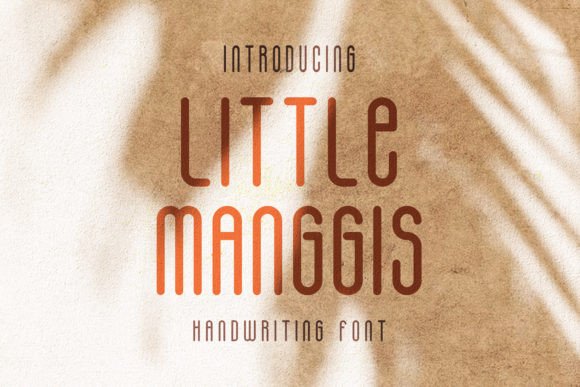
Little Manggis: Why This Minimal Retro Font Is the Secret Weapon for Modern Designers
In the ever-evolving landscape of digital design, trends come and go with startling speed. We see a surge in brutalist web layouts, followed by a wave of soft, rounded gradients, and then perhaps a return to stark, monochromatic minimalism. Amidst this constant churn, one element remains timeless yet often overlooked: typography. Specifically, retro-styled display fonts that bridge the gap between nostalgia and contemporary clean aesthetics. Enter Little Manggis, a typeface that has quietly become a favorite among designers seeking to add character without clutter.
If you have been scrolling through design portfolios or browsing modern branding agencies, you might have noticed a distinct shift toward fonts that feel both vintage and fresh. Little Manggis is at the forefront of this movement. But what exactly makes it special? Why should you consider adding it to your creative toolkit? In this guide, we will explore the anatomy of Little Manggis, its practical applications, and why its adaptability makes it a true treasure for your font library.
Understanding the Aesthetic: What is Little Manggis?
To appreciate Little Manggis, we must first understand the visual language it speaks. It is not merely a "fun" font; it is a carefully crafted minimal, retro styled display font. The term "display font" indicates that this typeface is designed for large sizes—headlines, posters, logos, and banners—rather than body text. Display fonts are meant to be seen, to grab attention, and to set a mood immediately.
The "retro" aspect of Little Manggis draws inspiration from mid-century graphic design, evoking feelings of warmth, approachability, and artisanal quality. However, unlike many vintage fonts that can feel heavy, ornate, or difficult to read, Little Manggis strips away the excess. It embraces minimalism. Its lines are clean, its curves are gentle, and its overall structure is uncluttered. This balance is crucial. In an era where users scan content rapidly on mobile devices, a font that is too decorative can cause cognitive fatigue. Little Manggis avoids this pitfall by maintaining high legibility even while retaining its stylistic charm.
The Psychology of Retro Minimalism
Why does this specific combination work so well? Psychologically, retro elements trigger a sense of familiarity and trust. They remind us of analog processes, handwritten notes, and physical print media. Minimalism, on the other hand, signals clarity, efficiency, and modernity. When you combine these two, you create a design that feels both trustworthy and current. Little Manggis leverages this duality perfectly, making it an ideal choice for brands that want to appear established yet innovative.
Why Adaptability is Key in Font Selection
One of the most significant challenges designers face is finding typefaces that work across multiple contexts. A font might look stunning on a website header but fail miserably on social media graphics or printed packaging. This is where the adaptability of Little Manggis truly shines. Its versatility allows it to fit seamlessly into various design ecosystems, making it a highly efficient asset for any creative professional.
Consider the following scenarios where Little Manggis proves its worth:
- Brand Identity: For startups or small businesses looking to establish a unique voice, Little Manggis provides a distinctive logo treatment that stands out without shouting.
- Editorial Design: Magazine covers and blog headers benefit from the font's ability to convey tone quickly. Whether the article is about coffee culture or tech innovation, the font adapts its personality to match the content.
- Packaging: In the world of product design, shelf appeal is everything. The retro-modern aesthetic of Little Manggis helps products look premium and curated, appealing to consumers who value craftsmanship.
This range of application is why experts recommend adding Little Manggis confidently to your library. You are not just buying a font; you are investing in a multi-purpose tool that can solve numerous design problems.
Practical Applications in Modern Work and Creativity
Let’s move beyond theory and look at how Little Manggis functions in real-world projects. Whether you are a seasoned graphic designer, a freelance illustrator, or a business owner managing your own marketing materials, understanding the practical relevance of this font is essential.
Enhancing Visual Hierarchy
In web design, establishing a clear hierarchy is vital for user experience (UX). Visitors need to know instantly what is most important. By using Little Manggis for headlines and pairing it with a neutral sans-serif for body text, you create a striking contrast. The bold, stylized nature of Little Manggis draws the eye, while the simple body text ensures readability. This technique is particularly effective for landing pages, portfolio sites, and event invitations.
Creating Emotional Connections
Design is not just about information; it is about emotion. Little Manggis carries a subtle warmth that can make a brand feel more human. For example, a bakery using Little Manggis for its signage communicates artisanal care and homemade quality. A tech startup might use it to soften their image, suggesting that their technology is user-friendly and accessible. The font acts as a visual cue, setting expectations before the user even reads a single word of copy.
Social Media and Digital Marketing
In the fast-paced world of social media, static images and short videos dominate. Text overlays are common, but they often get lost in the noise. Little Manggis, with its strong presence and clean lines, cuts through the clutter. It performs exceptionally well on platforms like Instagram and Pinterest, where aesthetics drive engagement. Its retro vibe also aligns well with current trends favoring "authentic" and "analog" content, giving your posts a curated, editorial feel.
Common Misunderstandings About Retro Fonts
Despite its popularity, there are some misconceptions about using retro-style fonts in modern design. One common assumption is that retro fonts must be paired with equally busy backgrounds or complex textures. While this can work, it often leads to visual chaos. With Little Manggis, the power lies in its simplicity. Because the font itself is minimal, it thrives on negative space. Leaving ample room around the text allows the characters to breathe, enhancing their impact rather than diminishing it.
Another misconception is that retro fonts are only suitable for niche markets, such as vintage clothing stores or antique shops. This is far from the truth. As mentioned earlier, the blend of retro and modern makes Little Manggis versatile enough for tech, education, and lifestyle sectors. The key is context. By treating the font as a modern interpretation of the past rather than a literal reproduction, designers can unlock its full potential.
How to Integrate Little Manggis Into Your Workflow
Ready to give Little Manggis a try? Here are a few best practices to ensure you get the best results:
- Pair Wisely: Since Little Manggis is a display font, pair it with a clean, understated typeface for body text. Geometric sans-serifs or humanist fonts work particularly well to balance its personality.
- Watch Your Spacing: Adjust tracking (letter spacing) and leading (line spacing) to enhance readability. Slightly increased tracking can give the text a more luxurious, airy feel.
- Limit Usage: Use Little Manggis sparingly. Let it shine in headlines and key phrases. Overusing it can dilute its impact and make your design feel dated rather than classic.
- Test in Context: Always preview your design in its final environment. A font that looks great on a desktop monitor might behave differently on a mobile screen. Ensure your choices remain legible across all devices.
Conclusion: A Treasure for Your Library
In conclusion, Little Manggis represents more than just a stylish addition to your font collection. It embodies a design philosophy that values clarity, nostalgia, and adaptability. In a digital world saturated with noise, the ability to communicate with elegance and simplicity is a superpower. By choosing Little Manggis, you are choosing a tool that respects the viewer’s time while delighting their senses.
Whether you are revamping a brand identity, designing a personal portfolio, or creating content for social media, Little Manggis offers the flexibility to meet your needs. It is a testament to the idea that good design is not about adding more, but about refining what matters. So, add it confidently to your library. You will be astounded by the results, as your designs gain a new level of polish, personality, and purpose.