The Typography of Absurdity: Why Farcical Is the Quirky Display Font You Need for Spectacular Designs
In the vast, often sterile landscape of digital typography, designers and developers frequently find themselves trapped in a cycle of safe choices. We reach for Inter, Roboto, or Helvetica because they are reliable, legible, and professional. But what happens when reliability becomes boring? What happens when the message requires not just clarity, but character? This is where Farcical enters the stage. It is not merely a font; it is a fun and quirky display font that demands attention, disrupts expectations, and adds a layer of theatricality to any design project.
Typography is the voice of your visual content. While words convey meaning, typefaces convey mood. A serious legal document requires gravity, but a creative portfolio, a playful brand identity, or an engaging educational module can benefit immensely from personality. Farcical provides that personality with a distinct flair. It allows creators to make their ideas even more realistic by grounding abstract concepts in tangible, expressive shapes. When used correctly, it creates spectacular designs that linger in the mind long after the user has scrolled past.
Deconstructing the Quirk: Characteristics of Farcical
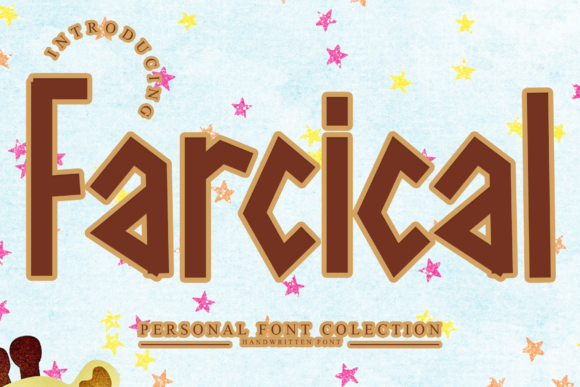
To understand why Farcical works, one must first appreciate its structural DNA. Unlike traditional serif or sans-serif fonts that prioritize uniformity, Farcical embraces irregularity. Its letterforms often feature exaggerated curves, unexpected angles, and a hand-drawn aesthetic that feels both intentional and spontaneous. This is not a font designed for dense blocks of body text; rather, it is a display font, meant to be seen, read quickly, and felt emotionally.
The "farcical" nature of the typeface refers to its ability to inject humor and satire into static media. In literature, a farce is a comedy that uses highly improbable situations and exaggerated characters to provoke laughter. Similarly, this font uses typographic exaggeration to provoke interest. The letters might lean too far forward, stretch too wide, or bounce with an energy that suggests movement. These characteristics serve a specific purpose: they break the monotony of the screen.
- Exaggerated Proportions: Many characters feature elongated ascenders or descenders, creating a rhythmic verticality that draws the eye up and down the page.
- Hand-Crafted Imperfections: Subtle variations in stroke width mimic the pressure of a pen or brush, adding a human touch that machine-perfect vectors often lack.
- Playful Ligatures: Certain letter combinations connect in surprising ways, turning standard words into visual puzzles that engage the reader.
These features do not exist in a vacuum. They are tools for communication. When a designer selects Farcical, they are signaling to the audience that the content to follow is unconventional, bold, and perhaps a little bit silly. This sets the right expectation for users who are looking for entertainment, creativity, or a break from the corporate norm.
Real-World Applications: Where Farcical Shines
The versatility of a display font lies in its context. While Farcical is quirky, it is not chaotic. It thrives in environments where hierarchy and emphasis are critical. Here are several practical scenarios where incorporating this font can elevate a project.
Brand Identity and Logo Design
For startups and small businesses aiming to stand out in crowded markets, logo design is paramount. A standard geometric sans-serif might blend in with competitors, but a custom logotype using Farcical can become iconic. Imagine a coffee shop named "Bean There" or a boutique agency called "Odd Jobs." The inherent whimsy of the font reinforces the brand name, creating an immediate association with fun and approachability. It helps create spectacular designs that are memorable without requiring complex graphic elements.
Editorial and Magazine Headers
In digital publishing, click-through rates depend heavily on headline appeal. Editors and content creators can use Farcical for article titles, pull quotes, or section breaks. Because the font is visually heavy and distinct, it commands attention in a feed full of similar-looking text. It acts as a visual anchor, guiding the reader’s eye through the noise. For example, a lifestyle blog discussing travel hacks could use Farcical for headers like "Pack Light, Travel Right," making the advice feel energetic and exciting.
Educational Materials and Presentations
Educators know that engagement is the key to retention. Slides filled with dense bullet points cause cognitive fatigue. By introducing Farcical for key terms, chapter titles, or important takeaways, teachers and trainers can break up the visual monotony. It makes learning feel less like a chore and more like an exploration. For hobbyists creating tutorials—whether on knitting, coding, or cooking—the font adds a personal, craft-like quality to the instructions.
The Psychology of Quirkiness: Connecting with the Audience
Why does quirkiness work? In marketing and design psychology, novelty triggers dopamine. When a user encounters something unexpected—a font that looks like it was drawn by a mad scientist—they pause. This micro-pause is valuable. It increases dwell time and improves recall. Farcical leverages this psychological principle by offering a visual surprise.
However, there is a delicate balance. If a font is too difficult to read, it fails its primary function. Farcical strikes a chord between legibility and expression. It remains readable at larger sizes, which is crucial for headlines and banners. This ensures that while the design is spectacular, the message is still clear. This balance is essential for professionals who need to maintain credibility while injecting personality. You can be funny without being unprofessional if you use the tool appropriately.
Consider the difference between a formal invitation and a birthday party flyer. The former uses elegant serifs; the latter might use a bouncy script. Farcical belongs in the latter category, but with enough structure to be used in semi-formal creative contexts. It bridges the gap between pure art and functional communication.
Implementation Strategies: Best Practices for Usage
Using Farcical effectively requires strategic planning. It is not a one-size-fits-all solution. To maximize its impact, consider the following implementation guidelines.
- Pairing is Key: Since Farcical is a display font, it needs a partner. Pair it with a clean, neutral sans-serif or serif for body text. This contrast highlights the quirks of Farcical while ensuring readability for longer passages. Let Farcical be the star, and let the secondary font be the supporting actor.
- Use Sparingly: Treat Farcical like salt in a dish. A pinch enhances the flavor; too much ruins the meal. Use it for headlines, subheads, buttons, and short phrases. Avoid paragraphs. If you need to explain a complex concept, use a more conventional typeface.
- Consider Color and Background: The quirky nature of the font pairs well with vibrant colors or high-contrast backgrounds. Pastel backgrounds can soften the edge, while dark mode interfaces can make the bright, bold strokes pop. Experiment with color to enhance the emotional tone.
- Respect Hierarchy: Use different weights or sizes of Farcical to create hierarchy within headings. A large, bold Farcical header followed by a smaller, lighter version can create a dynamic visual rhythm.
Comparative Analysis: Farcical vs. Traditional Display Fonts
How does Farcical stack up against other popular display fonts like Comic Sans, Papyrus, or Lobster? It is important to distinguish between "bad" design and "intentional" style. Comic Sans is often criticized for its childish appearance and overuse in inappropriate contexts. Papyrus is associated with clichés and poor kerning. Lobster, while popular, can feel dated and overly ornate.
Farcical avoids these pitfalls by adhering to modern design principles. It has better kerning, more refined letterforms, and a contemporary sensibility. It does not rely on nostalgia or gimmickry. Instead, it offers a fresh, modern take on the handwritten aesthetic. For business owners and creators who want to avoid the stigma of poorly chosen fonts, Farcical offers a sophisticated alternative that is still fun and engaging.
Furthermore, Farcical is versatile across mediums. Whether printed on merchandise, displayed on a mobile app, or projected on a large screen, it maintains its integrity. Its vector-based construction ensures scalability, allowing it to look sharp at any size. This technical robustness makes it a practical choice for professionals who cannot afford to compromise on quality.
Future Trends: The Rise of Expressive Typography
We are living in an era where brands are increasingly humanizing their online presence. Consumers crave authenticity and connection. Static, corporate aesthetics are giving way to dynamic, expressive visuals. Typography plays a central role in this shift. As websites and apps become more immersive, the demand for unique typefaces grows.
Farcical aligns perfectly with this trend. It represents the move towards personalized, emotive design. As AI-generated content floods the internet, human-centric design elements like quirky fonts will become even more valuable as markers of authenticity. Using Farcical signals that a human curated the experience, adding value to the digital interaction.
Conclusion: Making Ideas Realistic Through Expression
In conclusion, Farcical is more than just a decorative element; it is a powerful tool for communication. It allows designers, educators, and business owners to inject life into their projects. By understanding its characteristics, applications, and best practices, you can leverage this fun and quirky display font to create spectacular designs. Remember, the goal is not just to be seen, but to be remembered. With Farcical, your ideas can become more realistic, more engaging, and undeniably yours.