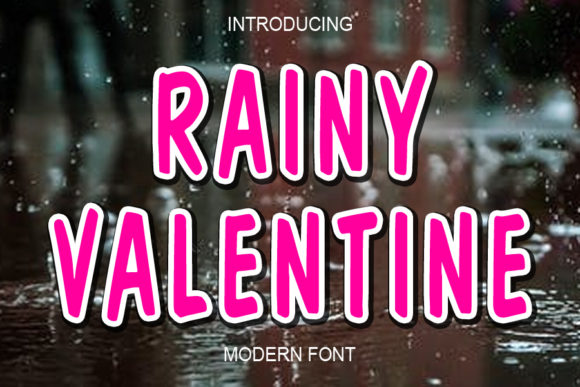
Rainy Valentine: Elevating Your Design with Bold, Daring Typography
Choosing the right typeface is rarely just about aesthetics; it is a strategic decision that influences readability, brand perception, and overall user experience. When you encounter Rainy Valentine, you are looking at a thick lettered, simple, and daring display font. It is not a subtle background texture or a body text meant for long-form reading. Instead, it is an asset designed to command attention. For creators, marketers, and small business owners alike, understanding how to wield such a powerful tool can mean the difference between a design that blends into the noise and one that stops the scroll.
This font possesses the potential to elevate any creation, but only if used correctly. Many designers fall into the trap of treating every font as if it serves the same purpose. Rainy Valentine demands respect through restraint. Its bold weight and distinctive character make it an incredible asset to your fonts library, provided you understand its specific role in your visual hierarchy. Below, we explore common pitfalls associated with display fonts like this and offer practical advice on how to integrate them effectively into your projects.
The Trap of Overuse and Misplacement
The most frequent mistake when adopting a striking display font is assuming it works everywhere. Because Rainy Valentine is simple yet daring, it naturally draws the eye. However, simplicity does not equate to versatility in all contexts. A common error is using this heavy, impactful typeface for body copy, captions, or lengthy paragraphs. Doing so creates visual fatigue and reduces legibility significantly.
Why this matters: If your audience cannot read your message comfortably, the boldness of your headline becomes irrelevant. The brain processes heavy, thick lettering as a signal for "stop" or "look here," not "read this." When you force a display font into roles suited for sans-serif or serif body text, you compromise the efficiency of communication. Users may skim past your content because the visual weight feels oppressive rather than inviting.
The Better Approach: Use Rainy Valentine strictly for headlines, logos, poster titles, or short, punchy call-to-action buttons. Pair it with a clean, lightweight sans-serif for supporting text. This contrast creates balance. The boldness of the header grabs attention, while the neutral body text provides the necessary information without competing for focus. Think of Rainy Valentine as the spotlight and your body font as the stage lighting—both are needed, but they serve different functions.
Neglecting Context and Brand Alignment
Another overlooked detail is the emotional tone conveyed by a typeface. Rainy Valentine is described as "daring." This implies confidence, modernity, and perhaps a touch of rebellion or playfulness. Using this font for a somber corporate report, a medical pamphlet, or a traditional legal document creates a dissonance that confuses the viewer. The font’s personality clashes with the expected seriousness of the content.
Impact on Results: Inconsistent branding erodes trust. If a luxury skincare brand uses a font that feels too casual or aggressive, their high-end positioning is undermined. Conversely, if a trendy streetwear label plays it too safe, they miss an opportunity to connect with their target demographic. The font must align with the voice of the brand.
Practical Advice: Before downloading or purchasing Rainy Valentine, ask yourself what emotion you want to evoke. Is it excitement? Urgency? Modern sophistication? If the answer aligns with a bold, confident statement, this font is likely a strong candidate. Create a mood board. Place the font next to images and color palettes you intend to use. If the combination feels harmonious, you have found a match. If it feels jarring, reconsider your selection or adjust your other design elements to bridge the gap.
Ignoring Technical Specifications and Licensing
For freelancers and small business owners, the technical side of typography is often an afterthought. However, failing to check file formats and licensing agreements can lead to costly mistakes. Not all versions of a font like Rainy Valentine are created equal. Some may lack proper kerning pairs, meaning the spacing between certain letters looks uneven. Others might be limited to personal use only, which is a critical distinction for commercial projects.
- Kerning Issues: Always preview your text at various sizes. A font that looks good at 72 pixels might look disjointed at 300 pixels. Adjust tracking (letter-spacing) manually if the default settings do not suit your layout.
- Licensing Clarity: Ensure you have the correct license for your intended use. Are you using it for a client’s website? A physical product package? Social media graphics? Each medium may require a different tier of license. Ignoring this can result in legal fees that far exceed the cost of the font itself.
- File Formats: Verify that you receive web-ready formats (like WOFF2) if you plan to embed the font on a website. Heavy display fonts can impact page load times if not optimized properly. Compressing these files ensures your site remains fast and user-friendly.
Failing to Test Across Devices
In today’s mobile-first world, a design that looks perfect on a large desktop monitor may fall apart on a smartphone screen. Thick lettered fonts can sometimes lose their clarity or become pixelated on lower-resolution screens if not implemented correctly. Furthermore, on smaller screens, the sheer size of a display font can dominate the viewport, leaving little room for actual content.
The Consequence: Poor mobile responsiveness leads to higher bounce rates. If a user has to pinch-and-zoom just to read your headline because the font is too large or poorly spaced, they will likely leave. This directly affects your conversion rates and SEO performance, as search engines prioritize sites that provide a good user experience across all devices.
Solution: Conduct rigorous cross-device testing. View your designs on multiple screen sizes. Consider creating responsive typography rules where the font size scales down appropriately for mobile views. You might even choose to swap the display font for a simpler alternative on very small screens if readability is compromised. The goal is to maintain the brand identity while ensuring accessibility.
Evaluating Value Beyond Price
When evaluating whether Rainy Valentine is worth adding to your library, look beyond the price tag. A cheap font that lacks versatility or proper support can end up costing more in redesigns later. Conversely, a premium font that saves time and elevates quality offers a higher return on investment.
Consider the longevity of the trend. While "daring" fonts can feel current, some styles age quickly. Look for timeless qualities in the design. Is the structure solid? Does it work in monochrome? Can it be inverted against dark backgrounds without losing integrity? These factors contribute to the font’s utility over years, not just months.
Final Checklist Before Deciding:
- Does the font’s personality match my project’s goals?
- Have I checked the licensing terms for commercial use?
- Is the kerning and spacing adjustable and visually pleasing?
- How does it perform on mobile devices?
- Do I have a complementary font pair ready for body text?
Rainy Valentine is a powerful tool in the hands of a thoughtful designer. By avoiding common pitfalls like overuse, misalignment, and technical negligence, you can leverage its thick, simple, and daring nature to create designs that are not only visually striking but also effective and professional. Treat it as the asset it is, and let it elevate your creations to new heights.