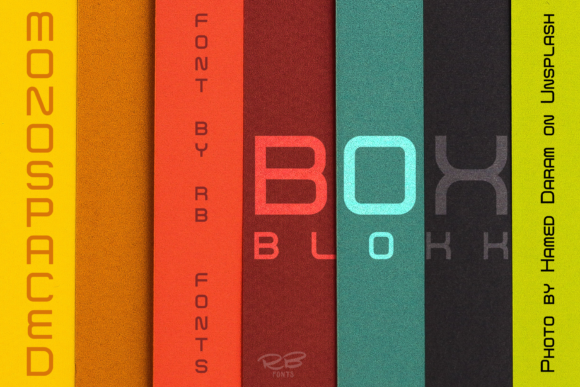
Box Blokk: The Squared Font That Brings Futuristic Edge to Your Designs
When you need a typeface that doesn’t just sit quietly in the background but commands attention with structural integrity, Box Blokk steps up as a serious contender. It is a monospaced, display squared font designed to read as strong, confident, and dynamic. But beyond those adjectives lies a tool that can fundamentally shift the visual weight of a project, adding tons of futuristic character to designs that might otherwise feel generic or soft.
In a digital landscape saturated with rounded sans-serifs and delicate serifs, there is a growing appetite for typography that feels engineered, architectural, and bold. Box Blokk fits squarely into this niche. It isn’t meant for body text or long-form reading; it is a display font, which means its primary job is to make a statement at size. Whether you are designing a poster, a logo, a website header, or a product packaging label, understanding how to wield this specific aesthetic can elevate your work from standard to standout.
The Anatomy of Confidence
To understand why Box Blokk works, you have to look at what makes it tick. As a monospaced font, every character occupies the same horizontal space. This creates a rhythmic, grid-like consistency that the human eye finds inherently organized and stable. When combined with its squared-off geometry, the result is a typographic voice that sounds like a robot speaking with absolute authority.
This geometric rigidity is not a bug; it is the feature. In design terms, "squared" fonts often convey industrial strength, precision, and modernity. They strip away the decorative flourishes of traditional serif fonts and the friendly curves of many humanist sans-serifs. What remains is pure structure. For designers working in tech, gaming, fashion, or automotive industries, this lack of ornamentation allows the content itself to take center stage without competing with fancy ligatures or varying stroke widths.
Real-World Applications: Where Box Blokk Shines
Theoretical discussions about font weights are fine, but practical application is where Box Blokk proves its worth. Here is how different professionals are integrating this squared aesthetic into their workflows.
Brand Identity and Logo Design
For startups in the cybersecurity, fintech, or AI sectors, trust and stability are paramount. A logo using Box Blokk immediately signals that the company is built on solid code and reliable infrastructure. Because the font is monospaced, it lends itself beautifully to logotypes where alignment is critical. Imagine a brand name where each letter sits in its own invisible box, creating a sense of data integrity. It’s a subtle psychological cue that says, "We are precise."
Event Posters and Music Graphics
If you are designing promotional material for an electronic music festival, a sci-fi convention, or a tech conference, Box Blokk provides the perfect backdrop for high-energy visuals. The font’s dynamic nature pairs exceptionally well with glitch art, neon color palettes, and abstract geometric shapes. Its futuristic character complements themes of innovation and the unknown. Designers often use it for large-scale headlines where the texture of the letters becomes part of the image itself.
Packaging and Product Labels
Consumer goods are moving toward minimalist, utilitarian aesthetics. Think of craft beverages, limited-edition sneakers, or high-end electronics. Box Blokk’s blocky appearance mimics the look of shipping labels, barcodes, and technical specifications. By applying this font to packaging, brands can tap into the "industrial chic" trend. It suggests that the product inside is manufactured with care, perhaps even hinting at a raw, unfiltered quality that appeals to modern consumers who value authenticity over polish.
User Interface Elements
While you should never use Box Blokk for paragraphs of text, it has a surprising utility in UI design for headers, buttons, and status indicators. In dashboard interfaces for data analytics or coding environments, a monospaced font maintains alignment across different screen sizes and resolutions. Using Box Blokk for section titles can create a clear visual hierarchy, distinguishing navigation elements from content. It adds a layer of sophistication that makes complex data feel more approachable and structured.
Who Benefits Most from This Typeface?
Different users bring different needs to the table, and Box Blokk serves them in distinct ways:
- Graphic Designers: They benefit from the font’s versatility in creating contrast. Pairing Box Blokk with a flowing script or a delicate serif can create striking juxtapositions that draw the eye.
- Web Developers: For landing pages targeting tech-savvy audiences, this font reinforces the message of engineering excellence. It aligns with the clean, code-centric culture of development communities.
- Marketing Specialists: When launching a new product that needs to feel cutting-edge, Box Blokk helps communicate innovation without needing expensive 3D renders or complex animations. The font does the heavy lifting.
- Hobbyists and Makers: For those creating custom stickers, t-shirts, or DIY projects, the squared style offers a retro-futuristic vibe that resonates with synthwave and vaporwave aesthetics.
Practical Considerations Before You Use It
Like any tool, Box Blokk has limitations. Recognizing these early saves time and prevents design missteps.
Readability is Not the Goal
It is tempting to use Box Blokk for everything because it looks cool. Resist that urge. Monospaced squared fonts are notoriously difficult to read in long passages. The uniform spacing and rigid shapes cause the eye to lose its rhythm, leading to fatigue. Always reserve Box Blokk for short bursts of text: headlines, subheads, captions, and single words. Let other fonts handle the narrative.
Kerning and Spacing
Because Box Blokk is monospaced, you don’t have to worry about adjusting the space between individual letters (kerning) as much as you would with proportional fonts. However, you do need to be mindful of overall tracking. Tight tracking can make the blocks merge into an illegible mass, while loose tracking can make the text feel disjointed. Experiment with wide spacing to enhance the futuristic, airy feel, or tight spacing for a dense, impactful block of text.
Context Matters
Box Blokk carries a specific cultural baggage. It reads as masculine, industrial, and sometimes cold. If your brand personality is warm, nurturing, or playful, this font might clash with your message. It works best when aligned with themes of technology, strength, future-forward thinking, or urban grit. Ensure the tone of the font matches the emotional intent of your project.
Styling Tips for Maximum Impact
To get the most out of Box Blokk, consider these styling techniques:
- Use Color Strategically: Black and white are classic, but try vibrant neons, metallic gradients, or muted pastels to soften the harshness of the squares. Color can change the mood from aggressive to inviting.
- Mix with Texture: Overlay the text with noise, grain, or transparency effects to give it a worn, used-in-space look. This adds depth and prevents the design from feeling too sterile.
- Combine with Minimalism: Give Box Blokk plenty of room to breathe. Don’t clutter the layout. The power of the font comes from its simplicity, so let negative space amplify its presence.
Ultimately, Box Blokk is more than just a font choice; it is a design decision that declares your project is built for the future. By understanding its strengths and respecting its limitations, you can harness its confidence and dynamism to create visuals that are not only seen but remembered.